

Introduction: Why Employee Benefits Matter for EOR Providers
Employee benefits plans are structured programs that provide workers/employees with financial protection, healthcare access, paid time off, and long-term security in addition to their base pay. In standard employment model, the employer designs and administers these benefits. In an Employer of Record (EOR) business model, however, the EOR becomes the legal employer and takes responsibility for delivering compliant, competitive benefits on behalf of its client.
For local EOR service providers, benefits are not just an administrative task, they are a strategic lever.
Well-designed benefits packages directly influence:
- Employee retention: Competitive benefits reduce turnover and improve engagement.
- Legal compliance: Proper benefits administration keeps adherence to labor laws and statutory obligations.
- Client trust: Clients rely on EORs to mitigate risk and provide a seamless worker experience.
By positioning themselves as benefits advisors and administration partners, EOR providers move beyond payroll processing into strategic HR partnership. This strengthens long-term client relationships and differentiates the EOR in a competitive market.
Understanding Employee Benefits in an EOR Business Setup
When workers are hired through a local EOR, “employee benefits” refer to all legally required and supplementary programs delivered under the EOR’s legal employment structure.
There is a critical distinction between responsibilities:
Client company responsibilities:
- Defining compensation philosophy
- Setting benefit expectations and budget
- Aligning benefits with global company culture
EOR legal responsibilities:
- Ensuring statutory compliance
- Administering benefits under local law
- Managing vendor relationships
- Handling payroll deductions and reporting
Local EOR providers must align benefit offerings with:
- Domestic labor laws
- Statutory requirements
- Industry best practices
Equally important is understanding the client’s internal employee experience in their home region. Clients may expect consistency across geographies, but local legal and cultural realities differ. EORs play a teaching and advisory role by explaining these differences and helping clients design aligned yet locally appropriate benefit packages.
Type 1: Statutory (Mandatory) Employee Benefits
Statutory benefits are those required by local labor laws. These are sometimes referred to as employer burden costs and form the foundation of any compliant employment relationship.
Common statutory benefits include:
- Social security or provident fund contributions
- Government-mandated health insurance
- Paid leave (annual, sick, maternity/paternity)
- Work injury or accident insurance
For EOR service providers, managing statutory benefits involves:
- Registering employees with relevant authorities
- Calculating employer and employee contributions
- Filing reports and making timely payments
- Maintaining audit-ready documentation
Errors in statutory compliance can result in penalties, back payments, and reputational damage. For clients entering a new market, the EOR’s expertise in navigating these obligations is often a primary reason they outsource employment.
Type 2: Health and Medical Benefit Plans
Health and medical benefits extend beyond statutory minimums and are often the most visible component of a competitive compensation package.
These may include:
- Group health insurance
- Dental and vision coverage
- Wellness and preventive care programs
Different countries structure healthcare differently. Some markets rely heavily on public healthcare systems supplemented by private insurance. Others depend primarily on employer-sponsored coverage. Variations may include health spending accounts, premium private medical insurance, or hybrid systems that complement government healthcare.
Clients rely on EOR providers to:
- Select reputable insurance vendors and brokers
- Negotiate group rates and components
- Manage policy administration
- Support employee enrolment and claims
Offering locally competitive medical benefits improves employee satisfaction, helps clients attract skilled talent in competitive markets, and can generate new business via returning workers.
Type 3: Retirement and Long-Term Savings Plans
Retirement and long-term savings benefits vary significantly in how common and structured they are across local labour markets. In some regions, retirement programs are heavily regulated and form a central pillar of employment. In others, employer-sponsored retirement benefits are more discretionary and used primarily as a competitive talent incentive.
For local EOR providers, understanding this environment is essential. Retirement benefits are not just monetary tools or programs; they signal long-term financial cost in employees and influence how workers measure job stability and employer credibility.
At their core, retirement benefits convey long-term financial security and demonstrate an employer’s commitment to workforce sustainability. They also support multiple clients align their workforce strategy with local expectations.
Typical retirement and savings benefits include:
- Pension schemes (mandatory or employer-enhanced)
- Employer-sponsored retirement savings plans
- Voluntary employee contribution programs
In markets with strong public pension systems, employer choose often supplement government programs. In markets with limited public retirement support, employer-sponsored packages may play a more vital role in employee financial planning. EOR providers must understand how these systems interact to design benefits that are both compliant and competitive.
Local EOR providers manage these programs by:
- Processing payroll deductions accurately
- Administering employer contributions
- Coordinating with pension administrators or financial institutions
- Ensuring compliance reporting and documentation
Well-managed retirement programs contribute to workforce stability by encouraging employee loyalty and reducing turnover. For multiple clients, EOR-administered retirement plans help standardize employee value propositions while respecting local legal frameworks and cultural expectations.
Type 4: Leave and Work-Life Balance Benefits
Leave benefits play an important role in employee well-being and productivity. This leave benefits plan include both paid and unpaid time off structures.
Common leave categories include:
- Annual leave
- Sick leave
- Maternity and paternity leave
- Public holidays
EOR providers are responsible for:
- Tracking leave balances
- Enforcing company and legal policies
- Ensuring compliance with local regulations
Proper leave management improves morale, reduces burnout, and supports a healthy workplace culture. For clients, transparent leave administration also reduces disputes and administrative burden.
Type 5: Allowances and Flexible Benefits
Allowances and flexible benefits supplement core compensation and can be customized to the specific requirements of a local workforce. These benefits often include transportation allowances that support employees manage commuting costs, meal or food benefits that help daily expenses, housing or relocation assistance for workers or employees moving between regions, and education or professional development funding that encourages skill growth. When structured thoughtfully, these supplementary benefits allow EOR providers to optimize total compensation packages in ways that reflect local economic realities and employee expectations.
Flexible benefits are especially important in local hiring contexts where lifestyle costs and cultural expectations vary. EOR providers must structure these benefits carefully to comply with tax and labor regulations, avoiding misclassification that could trigger audits or penalties.
Well-designed flexible benefits increase employee engagement while giving clients cost-effective ways to enhance total compensation.
How EOR Providers Design Benefit Plans for Clients
Building employee benefit packages requires EOR providers to evaluate strategic, financial, and regulatory factors. A well-structured and optimized plan balances competitiveness, compliance, and operational efficiency while meeting client objectives.
Industry benchmarks: EOR providers analyze industry standards/benchmarks to understand what competitors offer. It ensures benefit packages remain competitive, attract top talent, and reflect prevailing standards within the client’s industry.
Workforce demographics: Workforce demographics influence benefit design significantly. Age distribution, family status, seniority levels, and employee preferences help EORs tailor benefits that match real employee needs and expectations.
Budget constraints: Client budget constraints shape the scope of benefit offerings. EOR providers recommend cost-effective plans that maintain competitiveness while preventing unsustainable long-term financial commitments for employers.
Legal compliance: Legal compliance is foundational to benefit planning. EORs ensure all programs meet local labor laws, tax rules, and statutory obligations, reducing exposure to penalties and legal disputes.
Cost control: Effective cost control requires ongoing monitoring of premiums, contributions, and administrative expenses. EOR providers optimize vendor negotiations and plan structures to maintain financial predictability for clients.
Employee expectations: Understanding employee expectations helps EORs design attractive benefit packages. Competitive benefits improve engagement, retention, and employer reputation in local labor markets.
Ease of administration: Benefit plans must be easy to administer. EORs prioritize streamlined processes, integrated technology, and simplified reporting to reduce administrative burden for both clients and internal teams.
If you want, I can tighten the language to be more executive-style or expand slightly for a more educational tone depending on your editor’s preference.
Compliance and Administration Challenges for EOR Businesses
Managing more than one benefit program within a single payroll system is operationally complex and requires thoughtful coordination. EOR providers frequently face risks such as incorrect payroll deductions, late statutory filings, and misclassification of benefits, all of which can lead to legal issues, financial penalties, and strained client relationships if not handled proactively.
To mitigate risk, EOR providers should prioritize:
- Thorough documentation
- Regular internal audits
- Transparent client reporting
- Automated invoicing and system updates
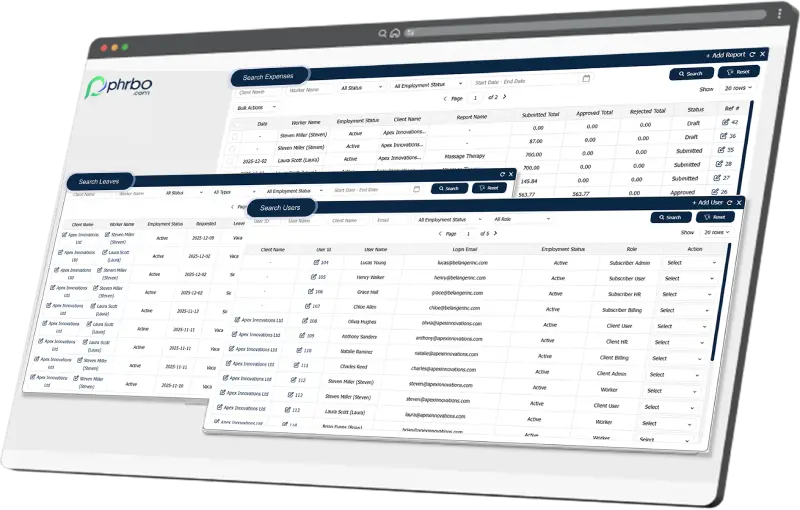
Strong EOR operational controls using modern EOR system such as PHRBO, protect both the EOR and its clients from compliance failures.
Business Benefits for Clients Using an EOR-Managed Benefits Plan
Clients gain significant advantages when benefits are managed through an experienced local EOR:
- Reduced legal and compliance risk
- Faster entry into new markets
- Predictable employment costs
- Improved employee trust and retention
- Streamlined HR operations
These advantages allow clients to focus on core business growth rather than administrative complexity.
Why Employee Benefits Are a Core Service for EOR Providers
Benefits management is a major competitive differentiator for EOR businesses.
Strong benefit offerings help providers:
- Win new clients
- Retain existing clients
- Build credibility in local markets
This positions the EOR as a long-term HR partner rather than a simple payroll processor.
There are also revenue opportunities. Depending on jurisdictional laws governing service and referral fees, EORs may earn:
- Administrative fees as a percentage of benefits premiums
- Referral fees from insurance partners
These arrangements must comply with local regulations, which vary by country and sometimes by region. Working with reputable brokers ensures transparency and ethical practice.
Ready to strengthen your EOR business?
Partner with PHRBO to transform your foundational payroll & HR operations into a retention-driven growth engine.
Conclusion: Building Strong Employment Through the Right Benefit Plans
The five main types of employee benefits plans, statutory benefits, health and medical coverage, retirement savings, leave programs, and flexible allowances, form the backbone of effective workforce management.
For local EOR providers, success depends on:
- Maintaining strict compliance
- Supporting employee well-being
- Enabling client business growth
By partnering with a knowledgeable local EOR, companies can structure and manage benefits effectively, ensuring both regulatory adherence and a strong employee experience. In today’s competitive labor markets, expert benefits administration is not optional — it is essential to sustainable expansion.
