

A Detailed Guide on the Differences of ACH Pull and ACH Pushes for local EORs and PEOs
Automated Clearing House (ACH) transactions are the backbone of modern payroll and financial transaction systems. For Employers of Record (EORs) and Professional Employer Organizations (PEOs), understanding the differences between ACH Pulls and ACH Pushes mechanism is essential for efficient payroll processing, cash flow management, and risk mitigation.
This article covers basic to advanced about how these two ACH methods work and how to implement them for EORs and PEOs.
Understanding The Process of ACH Transactions
Automated Clearing House (ACH) transfers are electronic payments that move funds between two bank accounts in the U.S. They are widely popular and regular methods for direct deposits, vendor payments, and payroll funding.
There are two main types in ACH transactions process:
- ACH Pulls: The recipient like EOR, PEO or Staffing companies initiates the payment transaction and withdraws funds from the payer’s bank account.
- ACH Pushes: The payer like client or employer initiates the transaction and sends funds directly to the recipient like EOR or PEO bank account.
Understanding key importance of these payment methods helps EORs and PEOs choose the best and faster option for payroll processing and financial management.
ACH Pull vs. ACH Push: Key Technical Differences
ACH Pull
- Transaction Initiator: The EOR or PEO requests the funds from the payroll client’s account.
- Speed: May take longer since the transaction requires authorization and bank processing time.
- Control: The EOR or PEO has more control over the timing of payments.
- Risk Involvement: There is a potential risk of insufficient funds (NSF), leading to payment failures and payroll delays.
- Convenience for Client: Clients do not need to manually process payments; funds are automatically withdrawn based on payroll schedules on EOR and PEO request.
- Chargebacks: There is a risk of chargebacks if the transaction is disputed, which can complicate cash flow management.
- Bank Fees: Some banks charge fees for ACH Pull transactions, which can add up for employers and EORs.
ACH Push
- Transaction Initiator: The employer/payroll client sends funds to the EOR or PEO.
- Speed: Usually faster since the employer directly transfers the money.
- Control: The payroll client/payer maintains full control over when the payment is made.
- Risk: Reduces the risk of NSF since the transaction occurs only when funds are available.
- Predictability for EORs and PEOs: Ensures payroll funding is received only when the employer has the necessary funds.
- Manual Process: Requires employers to take action for each payroll cycle, increasing administrative burden.
- Transaction Costs: While generally lower in cost than ACH Pulls, some banks or payment processors may still impose fees.
Key Point on Insufficient Funds
With ACH push payments, the payer’s bank checks for available funds before the transaction is submitted. If funds are insufficient, the payment is rejected immediately — before it ever reaches the recipient’s bank. This gives both parties early visibility and avoids the downstream complications that come with failed pull transactions.
Quick Comparison: ACH Push vs Pull at a Glance
| Core Feature | ACH Pull | ACH Push |
|---|---|---|
| Who Initiates? | Employer of Record (EOR) / Professional Employer Organizations (PEO) | Client/Employer/Payer |
| Speed | 1–3 business days (Same-Day ACH available) | Generally faster |
| Control | EOR/PEO controls timing | Client controls timing |
| Risk | More predictable for EORs | Due to reliance on Client payers, a risk of delays in payment exists. |
| Chargebacks | Possible | Rare |
| Administrative Burden | Lower for employers | Higher for employers |
| Bank Fees | Possible additional fees | Generally lower fees |
| Common Use Cases | Subscriptions, utility bills, loan repayments | Payroll, vendor payments, P2P transfers |
| Best For | Recurring, predictable payment schedules | One-time or irregular payments |
When to Use ACH Push vs Pull
The right method depends on whether your payment is recurring or one-time, and on where the administrative burden is best absorbed — by your team or your customers.
Choose ACH Push When:
- You are disbursing payroll, contractor payments, or expense reimbursements on a set schedule.
- You are making one-time vendor or supplier payments where the amount varies each cycle.
- You want the payer to retain control to reduce chargeback exposure.
- Speed matters and you need funds to move as soon as the payer acts.
- You are running peer-to-peer transfers or business-to-business disbursements.
Choose ACH Pull When:
- You collect recurring payments on a fixed schedule — subscriptions, memberships, or utility bills.
- You want to reduce the manual effort on your customers’ side and minimize late payments.
- You need predictable cash flow tied to automated collection rather than payer-initiated transfers.
- You offer loan repayment programs, insurance premium billing, or SaaS subscriptions.
- Your business model requires collecting payment before or alongside service delivery
The Benefits of ACH Payment System for EORs and PEOs
Better Cash Flow Management
- ACH Pulls: It delivers better predictability for the EOR/PEO but require ensuring sufficient funds are available in the employer’s bank account.
- ACH Pushes: It ensures that payments are fully funded but may require additional coordination with employers to prevent payroll delays.
Risk Mitigation
- ACH Pull Risks: If an employer’s account lacks funds, payroll payments can bounce, leading to additional fees and delays in payroll processing.
- ACH Push Advantages: It eliminates the risk of bounced payments since funds are sent only when available.
Compliance & Security
- Authorization Requirements: ACH Pull transactions require proper authorization to comply with NACHA (National Automated Clearing House Association) regulations.
- Fraud Prevention: ACH Push transactions reduce fraud risks since the payer controls the transaction.
- Data Security: Both methods require strong security measures to protect sensitive financial data.
ACH Push vs Pull for EORs and PEOs: Practical Considerations
For Employers of Record (EORs) and Professional Employer Organizations (PEOs), the stakes around payment timing are unusually high. Payroll cannot be late. Missing a funding window does not just disrupt cash flow — it affects employees directly and can create legal and compliance exposure.
Both ACH push and pull are used in EOR and PEO operations, often within the same business:
ACH Pull — Collecting Payroll Funding from Employer Clients
Many EORs and PEOs use ACH pull to collect payroll funding from their employer clients on a fixed schedule. Once the client signs the payment mandate, the EOR or PEO can initiate the debit ahead of each payroll run without waiting for the employer to act.
This model works well when client relationships are stable and mandates are properly authorized under Nacha’s requirements. The main operational risk is insufficient funds — if an employer’s account is short at the time of the debit, the payroll funding fails, potentially delaying employee pay. For this reason, many EORs add a buffer period between the pull date and the payroll processing date to allow time for return code resolution before payday.
ACH Push — Disbursing Pay to Employees and Contractors
ACH push is the standard method for distributing employee wages and contractor payments. Once the EOR or PEO has confirmed that funding is in place, they initiate outbound payments to each employee or contractor’s bank account. Because the EOR controls the timing of these pushes, they can coordinate disbursement precisely with payroll cut-off schedules.
For contingent workforces and staffing operations, the combination of pull (collecting funding from clients) and push (disbursing pay to workers) represents the most common and operationally sound structure — provided that the funding pull clears with enough lead time before the push must go out.
Compliance Note for EORs and PEOs
All ACH pull transactions require proper written or electronic authorization from the payer under Nacha rules. For EORs and PEOs, this means ensuring that every employer client has signed a compliant payment mandate before any debit is initiated. Pulling funds without a valid mandate is a regulatory violation that can result in returned payments, fines, and reputational damage. Both methods also require strong data security practices to protect the sensitive banking information involved.
PHRBO for Local EORs and PEOs
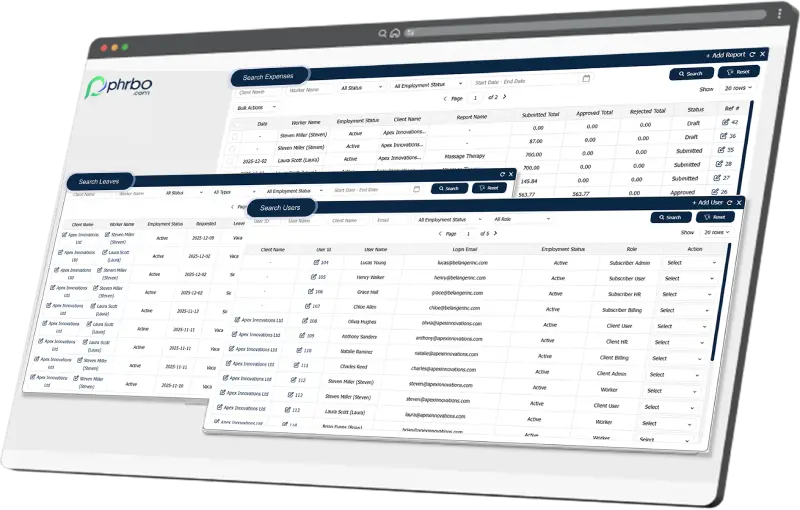
PHRBO – Automates Payroll Invoicing, Streamlines Worker and Client Management and Control Receivables and Payments
Conclusion
The choice between ACH Pulls and ACH Pushes depends on the needs of the client company, its financial structure, and its partnership with an EOR or PEO. For companies working with an EOR, ACH Pulls simplify the payroll process by allowing the EOR to directly withdraw funds, but this requires confidence in account balances. In a PEO arrangement, businesses will fund payroll in advance, maintaining more control over cash flow while reducing the risk of insufficient funds. Ultimately, selecting the right ACH method should align with the client’s financial stability, payroll structure, and risk tolerance. By understanding these differences, companies can make informed decisions that ensure smooth payroll operations, compliance, and financial efficiency—whether working with an EOR or PEO.
