
Renewal conversations shouldn’t start 60 days before contract end. They start the first time a client sees what your back-office team actually does. The work was always there. The conversation just wasn’t.
That’s the thesis of this piece: invisible work loses accounts. Visible work renews them.
Why Renewal Conversations Fail Before They Start
PEO work is invisible by design. Payroll runs clean, compliance filings go out on time, and benefits enrollment happens without a hitch. Nobody notices any of it — until something breaks.
That silence feels like a good sign internally. To the client, it reads differently. Silence isn’t neutral. It’s a churn risk. Clients forget what they’re paying for when nothing reminds them, and forgetting is the first step toward shopping around.
Think about it from the client’s seat. They signed on for relief from HR administration, tax filings, and compliance risk. Six months in, none of that feels urgent anymore, because your team absorbed it. The absence of pain gets mistaken for the absence of value.
By the time renewal season shows up, the account manager is reconstructing a year of work from memory, trying to build a case in a 30-minute call. That’s not a renewal strategy. That’s damage control with a deadline attached.
The Back-Office Work Clients Never See (And Why That’s a Problem)
Run through what actually happens behind a PEO relationship in a given month. Payroll gets processed on time, every time, across every worker classification. Tax filings go out accurate and on schedule, state by state. Compliance monitoring catches changes in labor law before they become violations.
Benefits administration handles enrollment, life events, and carrier communication without the client lifting a finger. Workers’ comp management tracks claims, mods, and renewals in the background. Each of these is routine to your team. None of it is routine to the client — they just never hear about it.
Here’s the shift that matters: stop treating each of these as a task you completed. Start treating each one as a renewal data point. A clean payroll run isn’t just “done.” It’s evidence. A caught compliance issue isn’t just handled. It’s a number attached to a risk your client no longer carries.
That reframe changes nothing about the work itself. It changes everything about how the work gets talked about.
Building a PEO Value Proposition Clients Actually Remember
Listing tasks doesn’t move a renewal conversation. Quantifying outcomes does. “We processed your payroll” is a fact nobody remembers past the meeting. “We caught a misclassification issue that would have cost you $14,000 in back penalties” is a fact that sticks.
The difference is specificity tied to a number the client cares about: hours saved, penalties avoided, compliance issues caught before they became fines, turnover reduced through faster benefits resolution. Every one of those is quantifiable if someone tracks it as it happens.
This is where most PEOs lose the thread. They do the work, but nobody logs it in a way that survives past the quarter. By renewal time, the wins are scattered across email threads, ticket systems, and someone’s memory of “that one thing we fixed.”
The fix is a running value ledger per client. Not a renewal-season scramble — a living record updated quarterly, built from real numbers as they happen. Hours of admin work absorbed. Dollars in penalties avoided. Compliance risks closed before they became problems. When renewal arrives, the ledger already tells the story.
A Renewal Conversation Framework That Starts Early
A PEO client renewal strategy built on a single end-of-contract call is a strategy built on hope. The account teams who keep clients treat renewal as a year-round rhythm, not a deadline event.
Quarterly Touchpoints, Not Annual Surprises
Four short check-ins a year, each one anchored to the value ledger, do more for retention than one polished annual review. The client sees the work in real time instead of receiving a summary of it months later.
What to Bring to the Table 90 Days Out
By the time renewal is three months away, the account manager should walk in with a documented year: compliance saves, benefits enrollment support, payroll accuracy, and response times, all with numbers attached. No reconstruction under deadline pressure.
How to Frame a Rate Increase Using Documented Work
A rate increase lands very differently when it follows a year of visible, quantified value versus when it arrives cold. The conversation shifts from “why is this costing more” to “here’s what continued to get harder, and here’s how we handled it.”
None of this requires new work from the back office. It requires someone writing down what’s already happening and bringing it to the client on a schedule, instead of leaving it buried in a system nobody outside the team ever opens.
What Account Managers Should Track Year-Round
This isn’t a marketing initiative bolted onto account management. It’s the account manager’s actual job, done with better documentation. A short, practical checklist keeps it from slipping:
- Compliance saves — specific issues caught before they became violations or fines
- Benefits enrollment support — open enrollment handled, life events processed, carrier issues resolved
- Payroll error prevention — misclassifications caught, off-cycle corrections avoided, filing deadlines met
- Response time metrics — how fast client questions and issues got resolved, tracked consistently
None of these items are new. Every PEO account manager already does this work. The difference is whether it gets tracked in a form that can be handed to a client, or whether it disappears the moment the ticket closes.
Stop Losing Renewals to Invisible Work
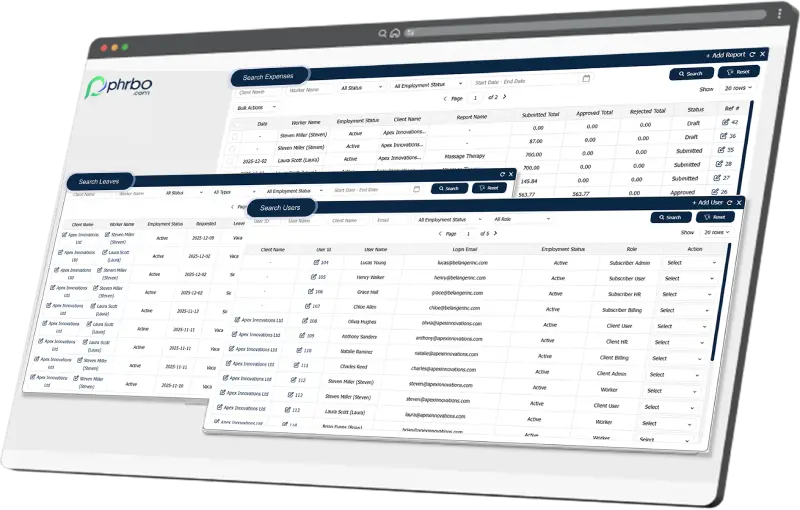
PHRBO gives your team a running record of every compliance save, payroll catch, and benefits fix — so renewal conversations start with proof, not a scramble. See how it works.
From Retention Tactic to Retention Strategy
Treating this as a renewal-season trick misses the point. A quarterly touchpoint schedule and a documented value ledger aren’t things you switch on 90 days before a contract ends — they’re a standing practice that runs the length of the relationship.
Client churn rarely comes from a single bad experience. It comes from a slow erosion of perceived value, one quiet quarter at a time, until a competitor’s sales pitch sounds like a better option than staying. Consistent visibility into back-office work closes that gap before it opens.
PEO client retention strategies that hold up over multiple renewal cycles share one trait: they make the invisible work visible on a schedule, not on demand. That’s the difference between an account team that reacts to renewal season and one that walks into it already ahead.
